Before the Ships Even Arrive, The Port of Rotterdam Already Knows – The Power of Digital Twins
 by
by 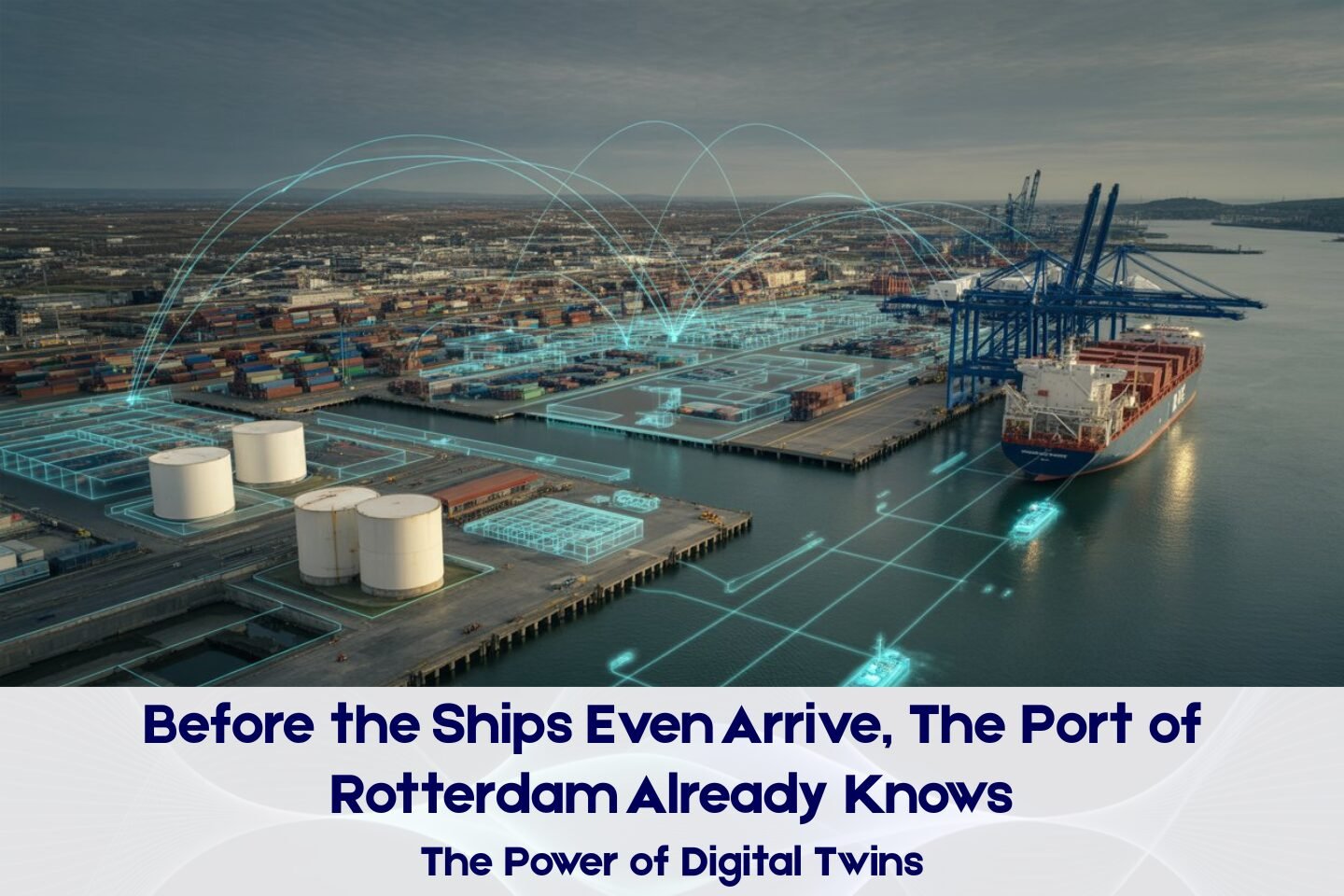
What if one of the world’s busiest ports could see disruptions before they happen, optimize operations in real time, and reduce millions in costs, all before a single ship docks?
That’s not a concept. That’s reality at the Port of Rotterdam.
At the heart of this transformation lies a powerful technology: the digital twin. And when combined with predictive analytics and large-scale digital transformation, Rotterdam isn’t just improving operations, it’s redefining how global trade works. This is exactly the kind of real-world innovation being explored at every leading digital twin summit, where industry leaders gather to understand what’s next.
The Hidden Problem in Global Ports (No One Talks About)
Ports have always been complex ecosystems.Thousands of moving parts. Unpredictable variables.High stakes.
Yet the majority of ports in operation depend on aged technological systems, responsive decision making, and disconnected databases. The result is:
- Millions in financial losses due to delayed operations
- Increased inefficiency in the scheduling of operations/activities
- Minimal visibility across all port operations.
Through the use of a digital twin, a port can now transition from reactive to proactive capabilities through developing an understanding for future operational requirements.
The Breakthrough: Rotterdam’s Port Digital Twin
The Port of Rotterdam has built a full-scale port digital twin, a virtual replica of the entire port.
This digital twin integrates:
- Real-time ship data
- Weather conditions
- Infrastructure performance
- Logistics flow
Using smart port technology, the system continuously mirrors reality. But more importantly, it simulates the future. This is not just innovation. This is digital transformation at an ecosystem level. And it’s exactly why discussions at a digital twin summit increasingly revolve around real implementations like Rotterdam.
How Smart Port Technology Is Changing the Game
The real power of Rotterdam’s system lies in smart port technology. By combining digital twin infrastructure with predictive analytics, the port can:
- Predict vessel arrival times
- Optimize docking schedules
- Reduce waiting time
- Improve cargo handling efficiency
This is where predictive analytics is so important as data by itself, will not accomplish anything, but rather the ability to turn the data into future insights value is where the true value of digital transformation is.
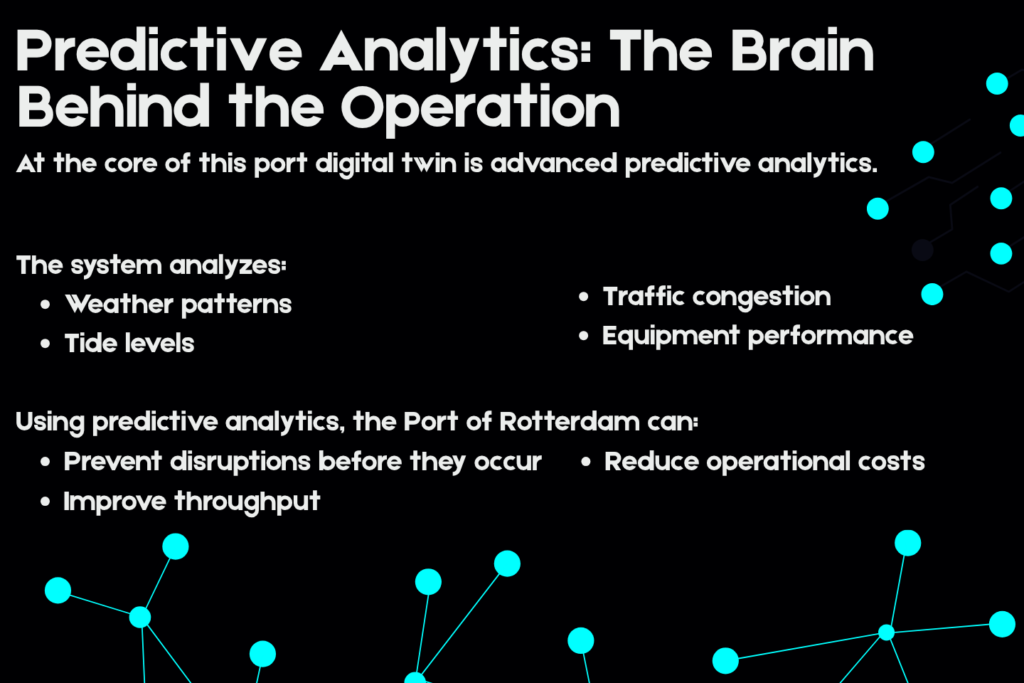
Predictive Analytics: The Brain Behind the Operation
The key technology behind this port digital twin is predictive analytics.
The predictive analytics analyze the following:
- Weather patterns
- Tide levels
- Traffic congestion
- Equipment performance
With predictive analytics, the Port of Rotterdam can:
- Prevent issues before they occur
- Save money through reduced costs
- Increase throughput
The combination of digital twin and predictive analytics makes the Port of Rotterdam a leader in smart port technology. And at every digital twin summit, industry experts are focusing intently on these capabilities.
Real Results: What Makes Rotterdam Europe’s Smartest Port?
The Port of Rotterdam has already seen real results through their port digital twin:
- Faster turnaround times
- Reduced fuel consumption
- Reduced emissions
- Improved efficiency
This is digital transformation at work – real ROI. And it demonstrates that a digital twin is not just a technology – it’s a business strategy.
Why This Matters for Business Leaders
You might think all of this only applies to ports. But think again. The same principles of digital twin, predictive analytics, and digital transformation apply to:
- Manufacturing
- Supply Chain Management
- Energy
- Smart Cities
That’s why business leaders are interested enough to attend a digital twin summit, they want to learn how they can apply these strategies to their industry.
Because the future belongs to those who can simulate, predict, and optimize
The Bigger Shift: From Reactive to Predictive Operations
What the Port of Rotterdam has achieved in terms of its digital twin is just a small part of a much bigger shift. From Reactive decision-making To Predictive decision-making.
The shift is powered by:
- Digital twin systems
- Advanced predictive analytics
- Scalable smart port technology
But it’s not just a shift; it’s part of a much bigger movement: digital transformation.
What You Can Learn From Rotterdam
What’s unique about the Port of Rotterdam?
It’s not just that it collects data; it’s that it simulates reality through a digital twin. It’s not just that it’s reactive to what’s happening; it’s that it’s predictive of what’s going to happen through predictive analytics. It’s not just that it’s optimizing what’s being done; it’s that it’s transforming the system through digital transformation. Which is why it’s considered Europe’s smartest port
Which is why it’s a topic of discussion at all major digital twin conferences.
Final Thought: The Future Is Already Here
What the Port of Rotterdam illustrates is that the future of operations is no longer just physical; it’s virtual + predictive
Organization that adopts:
- Digital twin
- Predictive analytics
- Scalable smart port technology
Will lead the next decade of digital transformation.
And those who don’t? They’ll struggle to keep up.
FAQ's
The Port of Rotterdam is using a digital twin to create a real-time virtual model of the port. This allows operators to simulate scenarios, optimize logistics, and make faster decisions using predictive analytics, making it one of the most advanced examples of smart port technology in Europe’s ongoing digital transformation.
The Port of Rotterdam is considered Europe’s smartest port because it combines digital twin, predictive analytics, and smart port technology to predict disruptions, reduce delays, and improve efficiency. This level of digital transformation is setting a benchmark often discussed at every major digital twin summit.
In the Port of Rotterdam, predictive analytics plays a key role by analyzing real-time data such as weather, traffic, and infrastructure conditions. When integrated with a digital twin, it enables proactive decision-making, making smart port technology more efficient and accelerating large-scale digital transformation.
A digital twin helps the Port of Rotterdam simulate ship arrivals, optimize docking schedules, and forecast congestion using predictive analytics. This use of smart port technology ensures smoother operations and is a core part of its digital transformation strategy.
Businesses can learn how the Port of Rotterdam uses digital twin, predictive analytics, and smart port technology to improve efficiency and reduce costs. These insights are often shared at a digital twin summit, helping companies accelerate their own digital transformation journeys.
No, while the Port of Rotterdam is a leading example, digital twin technology combined with predictive analytics and digital transformation can be applied across industries like manufacturing, logistics, and energy. This is why it’s a major topic at every digital twin summit and central to modern smart port technology and beyond.
Smart port technology, as seen in the Port of Rotterdam, uses digital twin and predictive analytics to improve visibility, reduce costs, and enhance efficiency. This shift is driving global digital transformation and is a key discussion point at leading digital twin summit events.
After the success of the Port of Rotterdam, global leaders are attending a digital twin summit to understand how digital twin, predictive analytics, and smart port technology can drive digital transformation and create competitive advantages in their industries.
The Port of Rotterdam collects real-time data from ships, infrastructure, and weather systems. This data feeds into a digital twin, where predictive analytics is used to generate insights. This integration of smart port technology is a key driver of its successful digital transformation.
The Port of Rotterdam stands out because it has successfully implemented a large-scale digital twin powered by predictive analytics and smart port technology. Its leadership in digital transformation makes it a benchmark case study frequently highlighted at every major digital twin summit.