What Changes in Industry 4.0 When Digital Twins Start Predicting the Future?
 by
by 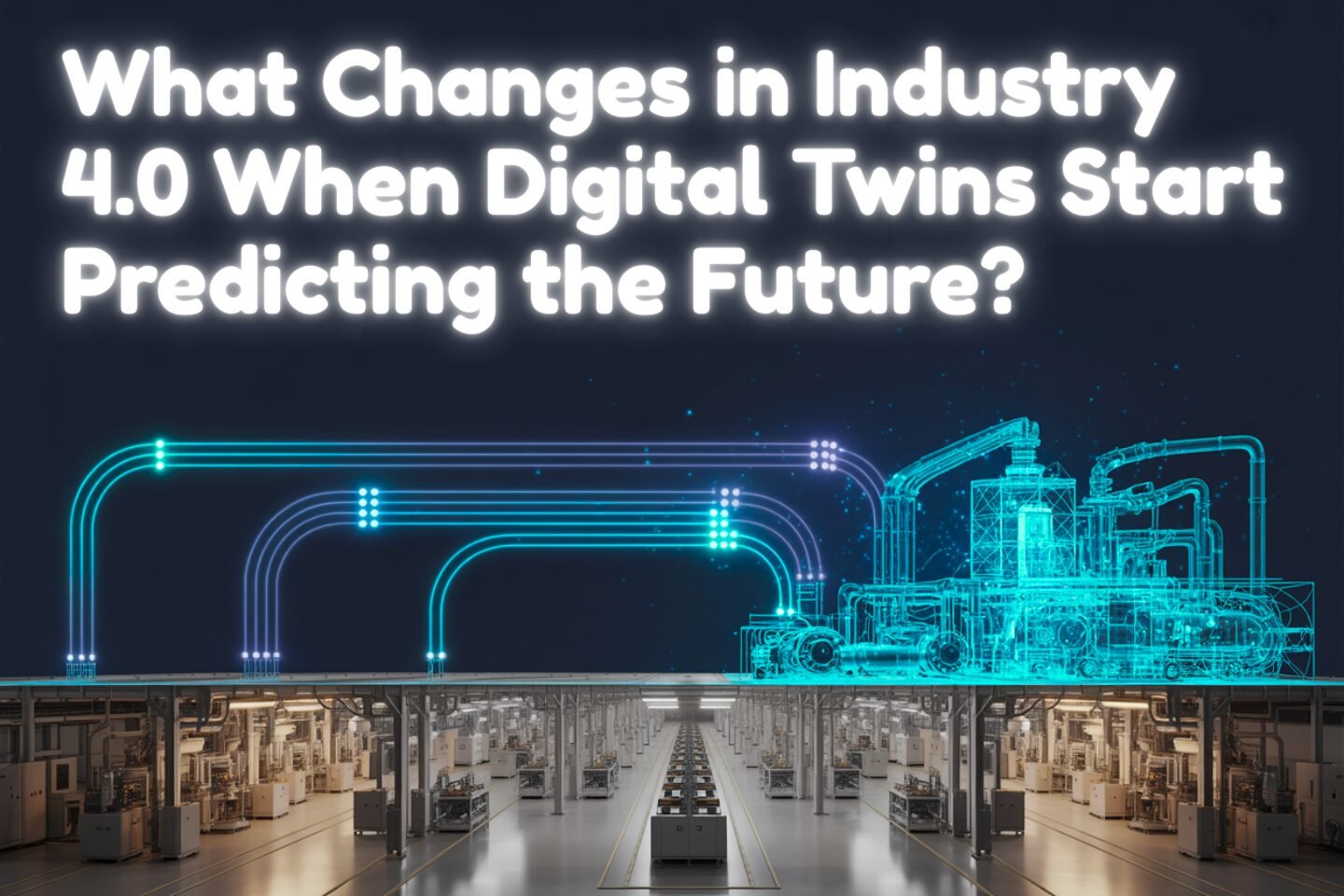
Industry 4.0 is often described through automation, connectivity, and data. A bigger change occurs when digital twin technology enables systems to predict outcomes before actions are taken. At that point, Industry 4.0 shifts from reacting to problems to preventing them.
A digital twin is a continuously updated digital replica of physical assets, systems, or environments. Using real-time data, simulation models, and analytics, it shows what is likely to happen next—before decisions are made.
As industries across Europe, including advanced industrial economies such as the Netherlands, accelerate digital transformation, this predictive capability is redefining how Industry 4.0 operates.
What Changes in Industry 4.0 When Digital Twins Can Predict Outcomes?
When digital twins predict outcomes, Industry 4.0 shifts from reactive automation to predictive intelligence. Decisions are guided by simulated future scenarios instead of historical data, allowing organizations to reduce risk, prevent failures, and act with greater operational confidence.
When digital twins begin predicting reality, Industry 4.0 moves beyond monitoring. Systems are adjusted before failures, inefficiencies, or disruptions occur.
This predictive shift changes Industry 4.0 in three key ways:
- Decisions are guided by future scenarios
- Risks are mitigated before materializing
- Innovation accelerates without disruption
Digital Twins in Manufacturing: How Industry 4.0 Stops Guessing
In manufacturing, digital twins allow Industry 4.0 systems to predict failures, test changes virtually, and optimize processes before execution. This replaces reactive maintenance and trial-and-error optimization with predictive, data-driven operations.
Manufacturing remains the most mature environment for digital twin adoption. Digital twins replicate machines, production lines, and entire factories in virtual environments.
By combining IoT data, simulation, and AI analytics, manufacturers predict equipment failures, test process adjustments, and improve quality before physical changes.
Key manufacturing benefits include:
- Predictive maintenance
- Early detection of quality issues
- Virtual testing of production changes
In advanced manufacturing ecosystems such as in the Netherlands, digital twins support precision engineering and continuous improvement strategies.
Digital Twin Use Cases in Energy: Predicting Stability Before Failure
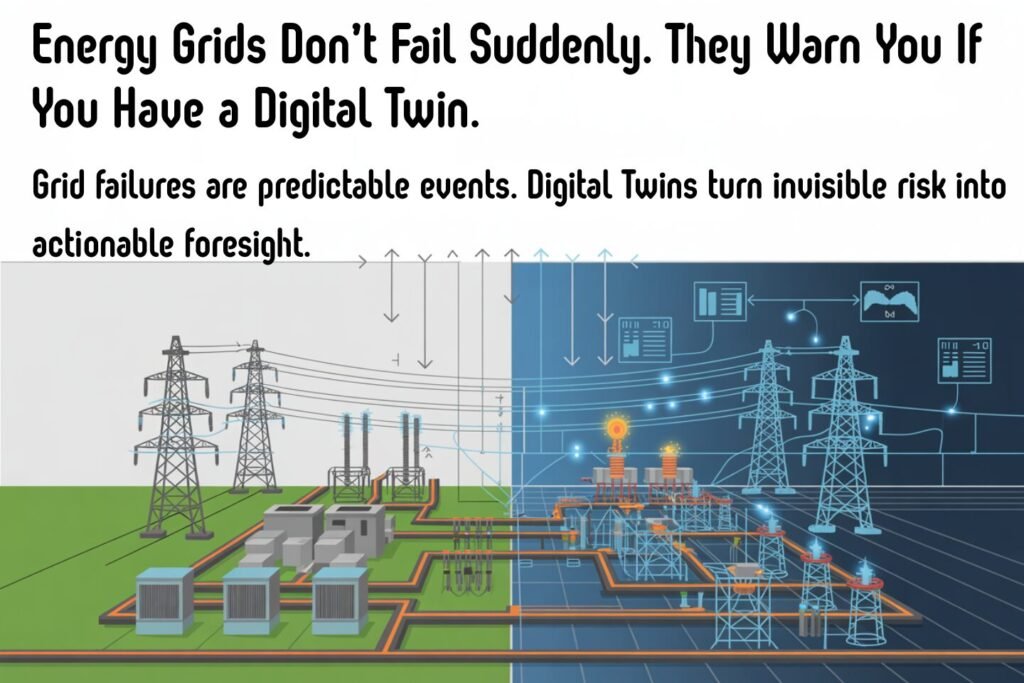
In energy systems, digital twins enable Industry 4.0 to predict demand shifts, asset degradation, and grid stress. This allows operators to maintain reliability and system stability before disruptions occur.
Modern energy infrastructure must balance efficiency, resilience, and sustainability. Digital twins model power plants, grids, and renewable assets in real time.
Common predictive energy use cases include:
- Demand forecasting
- Asset health monitoring
- Weather and grid stress simulation
Smart Cities and Digital Twins: Predicting Urban Outcomes Before They Happen
Digital twins allow Industry 4.0 cities to simulate and predict urban behavior, enabling planners to anticipate traffic, energy demand, and emergency scenarios before implementing real-world changes.
Smart cities represent one of the most complex Industry 4.0 applications. Transportation, utilities, buildings, and public services interact continuously.
Digital twins support urban planning through:
- Traffic flow modelling
- Energy consumption forecasting
- Emergency scenario simulation
Why Prediction Is the Real Breakthrough of Industry 4.0
Prediction transforms Industry 4.0 from connected systems into intelligent systems. Digital twins enable this shift by continuously modelling what is likely to happen next, allowing organizations to act before problems occur.
Unlike dashboards that show what already happened, digital twins forecast outcomes. Organizations can test strategies virtually and act with confidence.
Prediction enables Industry 4.0 organizations to:
- Reduce uncertainty
- Align stakeholders
- Prevent problems
Where Industry Leaders Explore Predictive Digital Twin Use Cases
As digital twin adoption matures, industry leaders seek practical environments to study predictive Industry 4.0 use cases through real-world examples rather than theory.
Industry forums and events support this exchange. Events such as the Digital Twin Summit Netherlands bring together experts to examine prediction-driven Industry 4.0 strategies across European ecosystems.
Conclusion
The defining change in Industry 4.0 is prediction—and digital twins make that possible. Across manufacturing, energy, and smart cities, digital twin use cases show how foresight replaces reaction.
Organizations that invest in predictive digital twin capabilities will shape the next phase of digital transformation. The future belongs to systems that can simulate reality, predict outcomes, and act before problems appear.
FAQ's
A digital twin is a real-time digital representation of physical assets, systems, or processes used to simulate, monitor, and optimize operations in Industry 4.0.
They connect physical operations with data, analytics, and simulation to enable predictive, data-driven decision-making.
They enable predictive maintenance, process optimization, and faster innovation without disrupting production.
They model grids and energy assets to improve reliability, efficiency, and sustainability.
They help governments plan, simulate, and optimize urban infrastructure and public services.
No. Digital twin adoption is expanding across organizations of all sizes as Industry 4.0 technologies mature.
They provide real-time insights through continuous data synchronization across assets and systems.
Digital twins rely on IoT, AI, cloud computing, and advanced simulation technologies.
Industry 4.0 requires predictive intelligence and system-wide visibility, which digital twins uniquely provide.
Industry events and expert forums like Digital Twin Summit Amsterdam focuses on digital twins and Industry 4.0 provide real-world insights and best practices.