Airbus Doesn’t Test Aircraft the Old Way Anymore, Here’s What Replaced It
 by
by 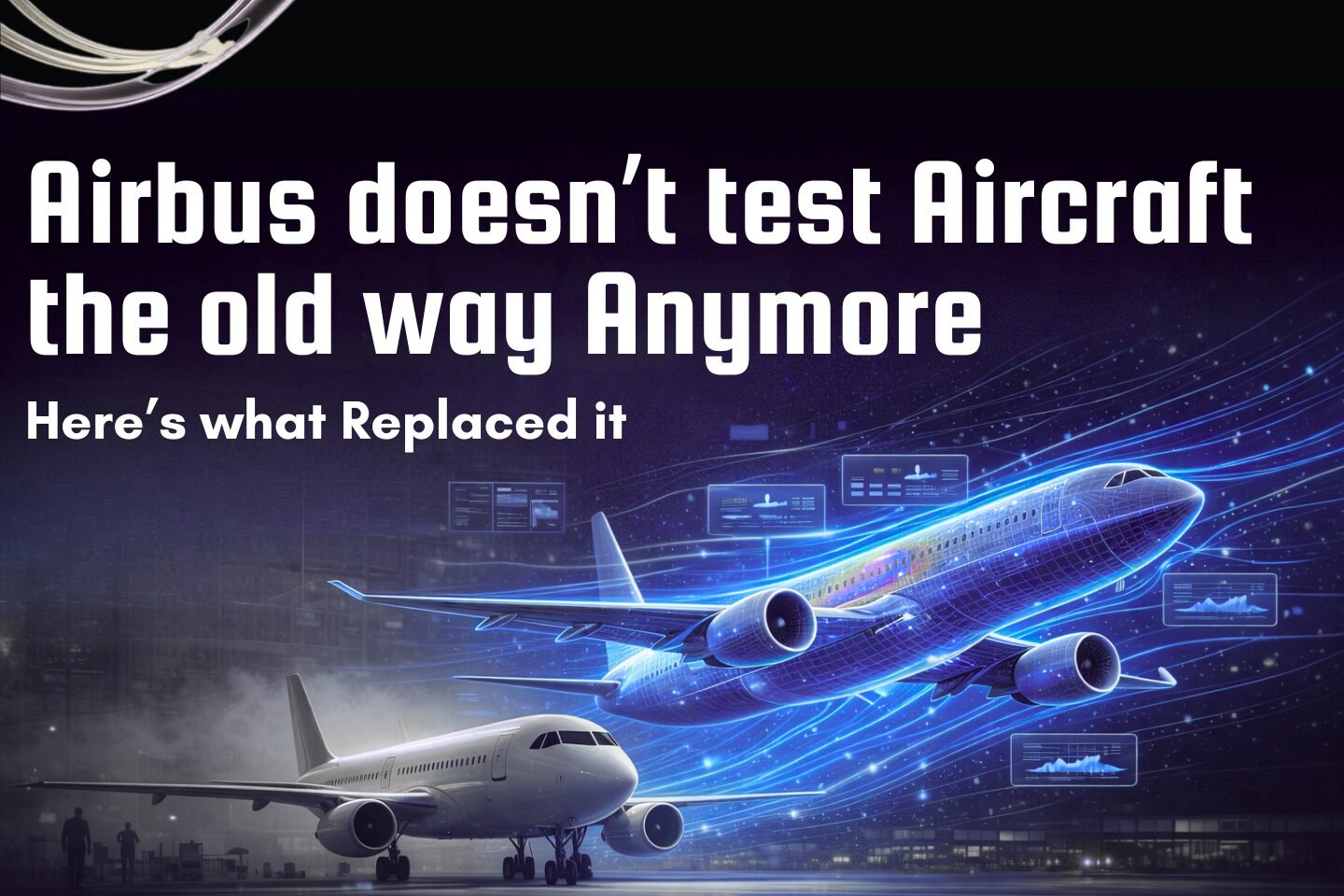
Aircraft testing has always been expensive, slow, and unforgiving. Every physical test costs millions. Every delay compounds risk. And once an aircraft is built, mistakes are no longer theoretical; they are structural.
That reality is exactly why Airbus made a fundamental shift.
Instead of relying primarily on physical prototypes and late-stage testing, Airbus now tests aircraft long before they exist in the real world, inside digital twins. This shift isn’t just a technological upgrade. It’s a change in how aircraft are designed, validated, and trusted.
What Is a Digital Twin in Aircraft Testing?
A digital twin is a virtual replica of a physical system. In the case of aircraft testing, it is the creation of a living digital replica of the aircraft that behaves like the real thing – structurally, mechanically, and aerodynamically.
Unlike static simulations, digital twins:
- Update continuously
- Integrate real-world data
- Enable repeated testing scenarios without physical constraints
For us at Airbus, this means aircraft can now be tested, stressed, and validated virtually before a single component is manufactured.
Why Traditional Aircraft Testing Was No Longer Enough
The traditional aircraft testing process relies on:
- Physical prototypes
- Wind tunnels
- Final stage validation
- Limited testing scenarios
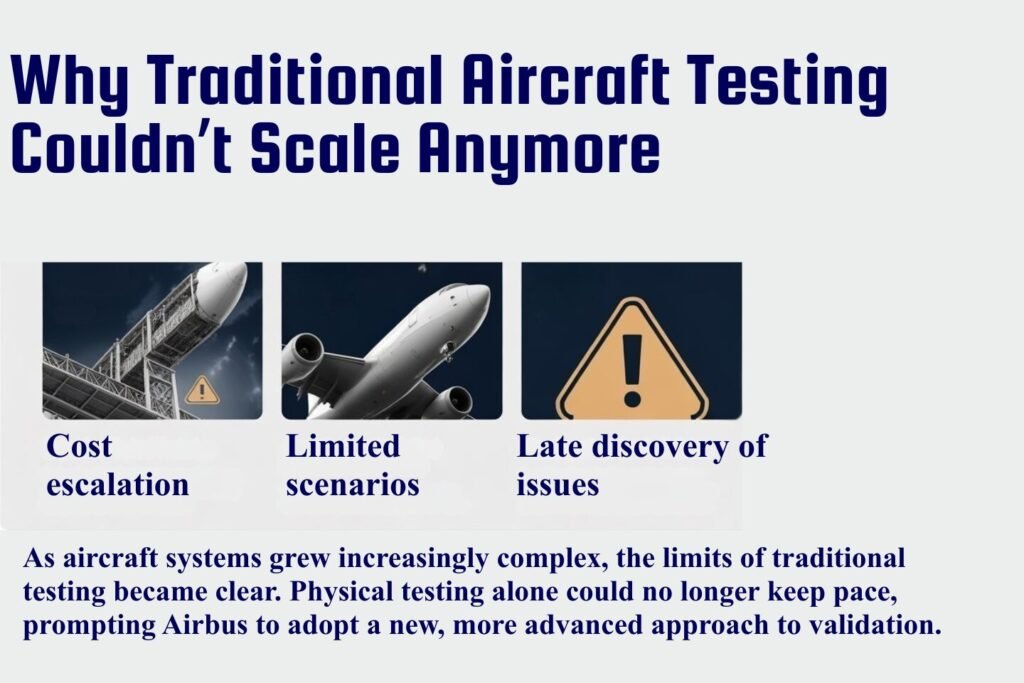
The traditional process has three major limitations:
- Cost – physical testing is costly
- Time – mistakes are detected at the end of the process when changes are most difficult
- Scalability – only a fraction of all possible testing scenarios can be performed
As aircraft systems became more complex, these shortcomings were no longer acceptable. Digital twins have solved this by shifting the testing process upstream.
How Airbus Uses Digital Twins Before Aircraft Ever Fly
Airbus’s use of digital twins spans the entire lifecycle of its aircraft, not just at the end. Here are a few ways they use them:
- Virtual Design Validation
Airbus engineers validate their designs by using digital twins. They can see how their designs will hold up in real life, identifying problems and making changes before they ever reach the factory floor.
2. Simulation of Extreme Scenarios
Digital twins allow Airbus to simulate extreme conditions that are difficult, rare, and impossible to replicate in real life. This allows for a better understanding of how their aircraft will perform in extreme conditions.
3. Continuous Improvement Through Data
Once aircraft enter service, they collect operational data that improves their digital twin. This allows for better accuracy in their designs for years to come.
What Digital Twins Change About Aircraft Safety
Digital twins don’t replace physical testing; they transform its role.
Instead of discovering problems late, with the help of digital twins, Airbus identifies risks early.
Instead of testing only what’s practical, engineers test what’s possible.
What they gain from using digital twins is:
- Early detection of risks
- Fewer costly redesigns
- Higher confidence before first flight
All of these are important in a safety-critical industry such as aerospace.
Why This Matters Beyond Airbus
Airbus is not alone in facing complexity. But it is one of the clearest examples of how digital twins reshape engineering decisions.
What Airbus demonstrates is a broader principle:
The Future of Testing Is Predictive, Virtual, and Data-Driven
Every industry, from automotive to energy to manufacturing, is making the same shift that Airbus has. They are using digital twins to change their approach from testing what they can to testing what they want.
The Bigger Shift: From Testing Products to Testing Possibilities
The real impact of digital twins is not their adoption, but the change in mindset they enable. Digital twins have brought a big transition from testing products to testing possibilities.
With digital testing:
- Engineers explore more options
- Failures become learning tools, not setbacks
- Innovation accelerates without increasing risk
Conclusion
Before flying for the first time, an aircraft is put through thousands of virtual test scenarios. Airbus’s use of digital twins is an example of how testing changed from physical limitations to digital exploration. For aviation, this isn’t just efficiency. It’s a new foundation for trust, safety, and innovation. From virtual testing to real impact, learn more at the Digital Twin Summit.
FAQ's
Airbus creates a virtual replica of an aircraft using a digital twin, which behaves like the real aircraft. Engineers can test an aircraft’s structure, aerodynamics, and systems, as well as failure modes, virtually before a physical prototype is built.
The traditional method of testing an aircraft is physical, using prototypes. However, this is a very expensive and slow process. Airbus has changed this and is using a digital twin, as this allows thousands of test cases to be run during the design phase of an aircraft, and helps to identify defects early.
A digital twin is a virtual replica of an aircraft or an aircraft system. It is a collection of simulation models and real-time data, used to create a replica of an aircraft, showing exactly how it behaves.
Digital twins help Airbus test extreme, unusual, and failure cases, as it is difficult and expensive to test an aircraft physically.
Airbus makes use of digital twins for simulating scenarios related to structural stress, aerodynamic loads, and environmental factors, which help the engineers understand the behavior of the aircraft not only in normal flight conditions but also during unusual flight conditions.
Once aircraft enter service, operational flight data is fed back into the digital twin. This data improves model accuracy, helps validate assumptions, and informs future aircraft designs, creating a continuous feedback loop between real-world performance and virtual testing.
Aircraft systems are becoming more complex, software driven and interconnected, digital twins allow Airbus to manage this complexity by testing interactions and behaviours virtually.
Yes. Industries like automotive, energy, manufacturing, and infrastructure are adopting similar approaches to reduce risk, accelerate innovation, and improve reliability.
The future of testing is predictive, data-driven, and virtual-first, where products are validated across thousands of scenarios before they ever exist in the physical world.