How the Construction Industry Is Building the Future with Digital Twins
 by
by 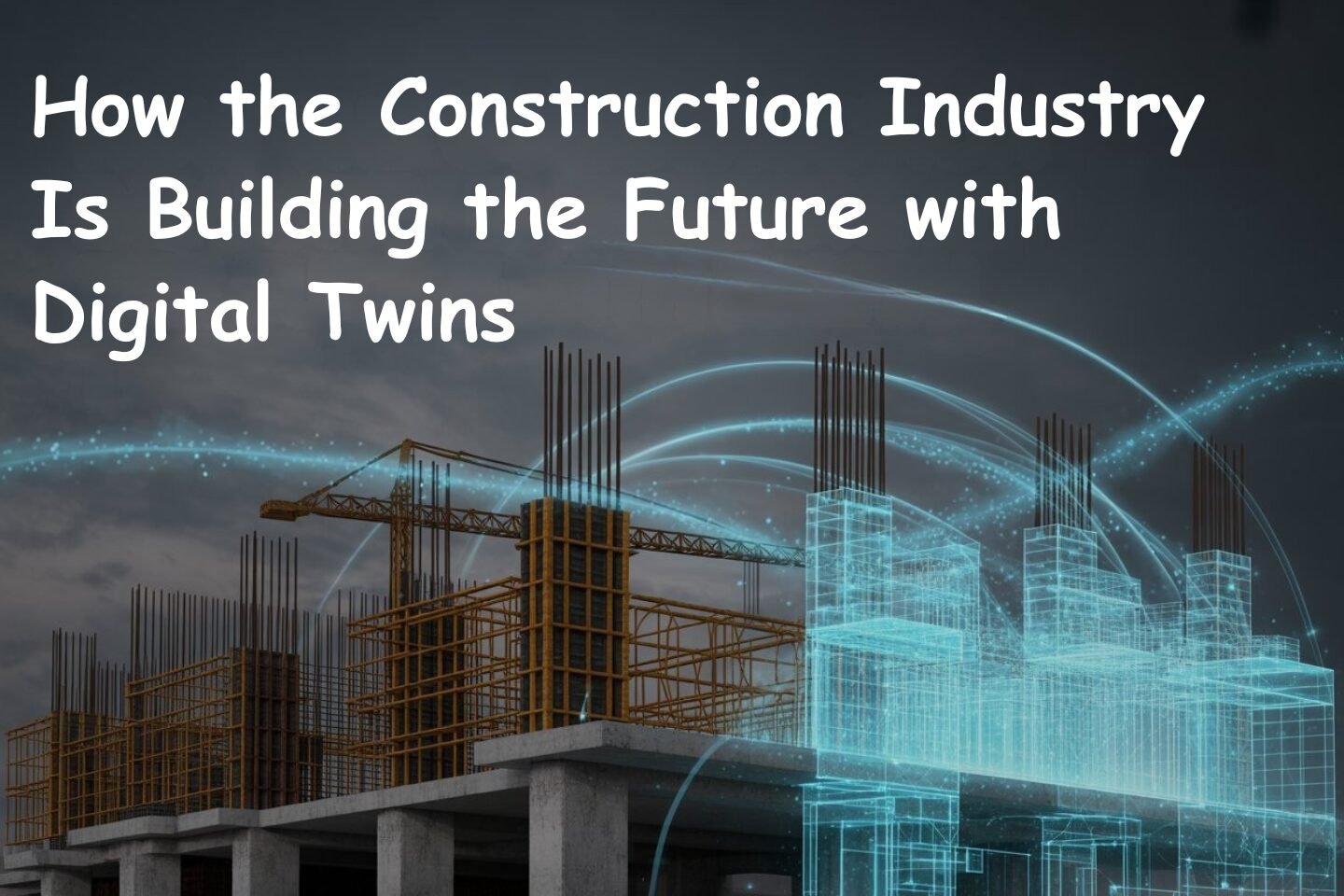
The construction industry has long been about precision. Today, however, precision alone is no longer sufficient. Projects are getting bigger, timelines are becoming tighter, and margins leave little room for error. To keep up, forward-thinking construction leaders are now turning to a technology that changes how projects will be planned, built, and operated: the Digital Twin.
At its core, the Digital Twin is a living digital replica of a physical asset, project, or environment. In construction, that means buildings, infrastructure, equipment, and even entire sites can be modelled, monitored, and optimized in real time. This shift is not incremental. It represents a fundamental leap in Digital Transformation for the construction sector.
Why Digital Twins Matter in Construction
Traditional design and construction rely on static drawings, fragmented data, and reactive decision-making. Digital Twin technology replaces that approach with continuous insight. By connecting design models with live data from sensors, project systems, and operational tools, construction teams achieve a single source of truth that evolves as the project develops.
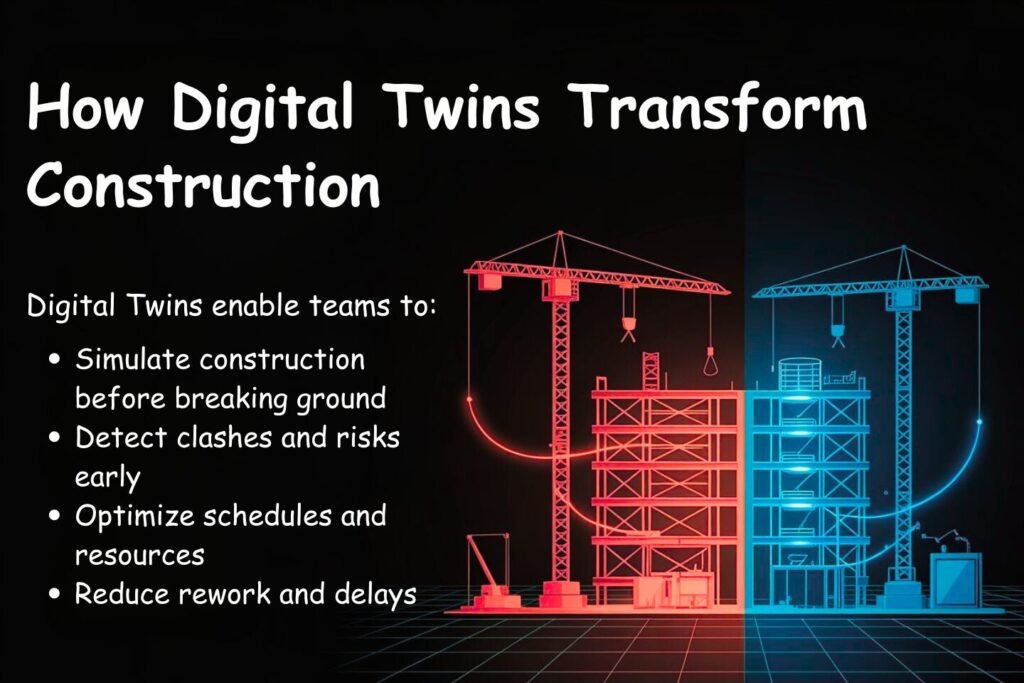
This is where Digital Twin technology becomes a strategic advantage: teams can simulate construction phases in advance of breaking ground, identify risks early, and make course corrections without expensive rework. In a sector where delays and overruns have been the norm, this degree of foresight changes everything.
From Design to Delivery and Beyond
A Digital Twin does not stop being useful once a building is complete-in fact, its value often increases. During construction, Digital Twins improve coordination between architects, engineers, contractors, and owners; after handover, the same Digital Twin will support facility management, maintenance planning, and long-term asset performance.
This end-to-end visibility is the bedrock of modern Digital Transformation. Construction firms that adopt Digital Twin workflows are not just delivering projects faster; they are delivering smarter and more resilient assets.
How Industry Leaders Are Scaling Innovation
Across global construction markets, Digital Twin adoption is accelerating. Major infrastructure projects, smart city developments, and large commercial builds use Digital Twins to manage complexity at scale. These organizations understand that Digital Twin technology has moved beyond an experimental stage. It is becoming standard practice.
The Digital Twin Summit has become a seminal platform where construction leaders, technologists, and decision-makers join forces to share real-world use cases, lessons learned, and future roadmaps. For firms serious about Digital Transformation, the Digital Twin Summit offers practical insight into how digital replicas will reshape construction operations.
The Future of Construction Is Predictive
As Digital Twin platforms mature, construction will be increasingly predictive rather than reactive. Risks will be modeled before they occur. Performance issues will be detected early. Decisions will be guided by data, not assumptions.
This is why Digital Twins are seen now as the backbone of construction-led Digital Transformation. They connect data, people, and processes into one intelligent system.
Conclusion
The construction industry enters a new era, wherein buildings are designed, delivered, and managed with clarity. Digital Twin technology is not improving projects; it is redefining how the industry builds for the future. And for the leaders prepared to move forward, that future takes shape at the Digital Twin Summit.
FAQ's
A Digital Twin is defined as a real-time virtual model of a physical construction asset, generally used for performance monitoring, simulation, and optimization.
Digital Twins connect live data with design models, allowing data-informed decisions at every stage of the project.
Construction companies utilize Digital Twins in order to minimize delays, rework, and ensure coordination among teams.
Yes, Digital Twins support all three: operations, maintenance, and long-term asset management.
The Digital Twin Summit is where industry leaders converge to share digital twin use cases and strategies in the construction industry.
Yes. Digital Twins help pinpoint design conflicts and operational risks early on.
Yes. Adoption of Digital Twin is gaining further acceleration as Digital Transformation gains priority.
Costs vary, but the long-term savings generally outweigh the initial investment.
Yes, it is used across small projects to large infrastructure developments.